
Best Teeth Whitening Methods at Home (Safe, Dentist-Approved Guide)
Teeth whitening at home has become more popular than ever, but not every whitening method is actually safe or effective. Some products promise fast whitening results while causing tooth sensitivity or even damaging enamel over time.
The good news is that there are dentist-approved whitening methods you can safely use at home to remove stains, brighten your smile, and improve confidence without harming your teeth.
This complete guide explains the safest and most effective teeth whitening methods at home, how they work, which methods deliver the fastest results, and how to whiten teeth naturally while protecting enamel.
What Causes Teeth Stains?
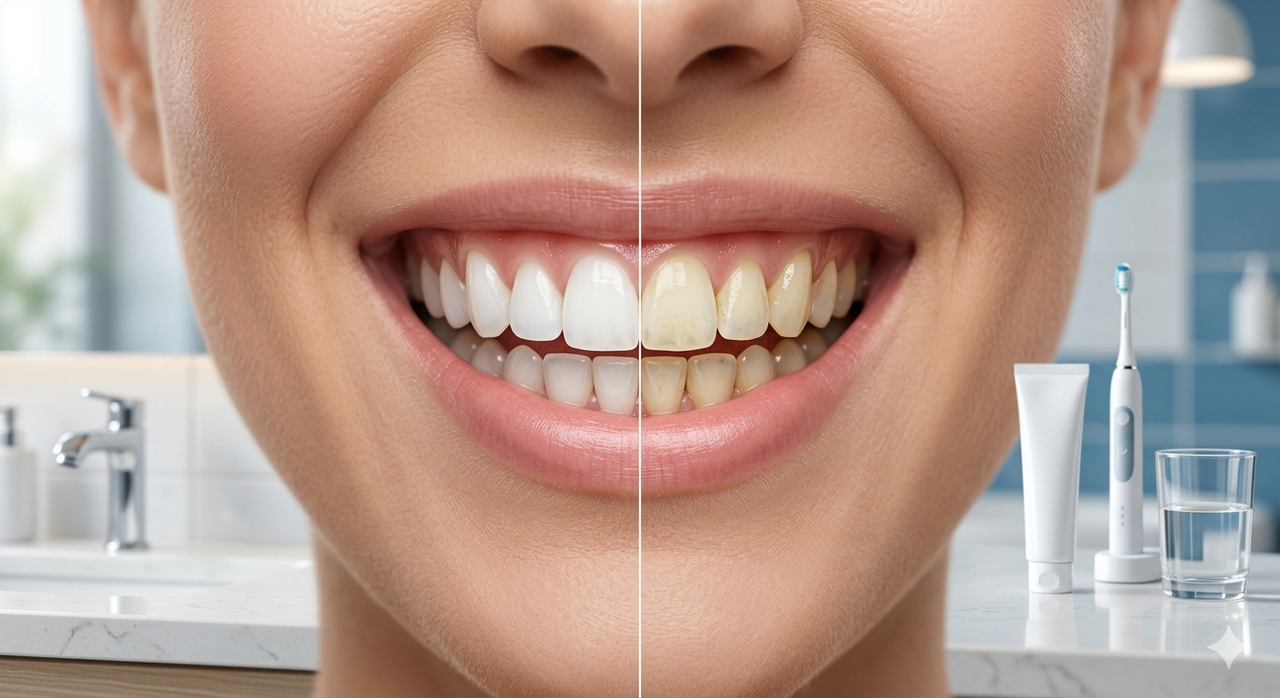
Before choosing the best whitening method, it’s important to understand why teeth become yellow or stained in the first place. Teeth discoloration usually develops gradually due to food, drinks, smoking, aging, and enamel wear.
There are two main types of stains:
- Surface stains: Found on the outer enamel layer and usually caused by coffee, tea, soda, wine, or smoking.
- Deep stains: Located inside the tooth structure and often caused by aging, medications, enamel thinning, or long-term smoking.
Common causes of yellow teeth include:
- Coffee and tea
- Smoking and tobacco use
- Red wine
- Turmeric and dark spices
- Matcha and green tea stains
- Poor oral hygiene
- Aging and enamel erosion
Related guides: Coffee Stained Teeth: Causes, Removal, and Prevention
Safest Way to Whiten Teeth at Home
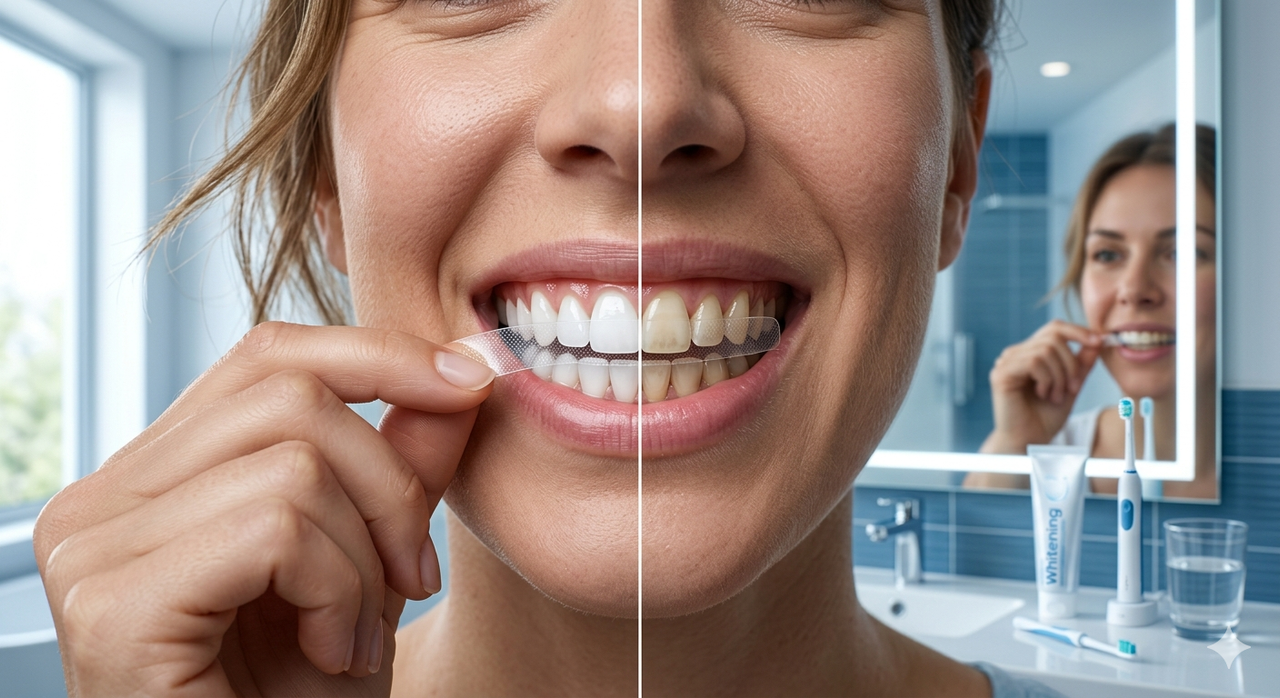
The safest way to whiten teeth at home is by using dentist-approved whitening products that contain controlled amounts of hydrogen peroxide or carbamide peroxide. These ingredients help break down stains without excessively damaging enamel when used correctly.
Safe whitening methods include:
- Whitening strips
- LED whitening kits
- Whitening toothpaste
- Custom whitening trays
- Professional dentist-approved kits
The safest whitening products are usually those designed for sensitive teeth or products recommended by dental professionals.
Avoid:
- Overusing whitening products
- Brushing aggressively with baking soda
- Using lemon juice on teeth
- Activated charcoal overuse
- DIY acidic whitening remedies
Overusing harsh whitening methods may weaken enamel and increase tooth sensitivity over time.
Fastest Way to Whiten Teeth at Home
If your goal is fast whitening results, peroxide-based whitening strips and LED whitening kits are usually the quickest at-home options. Many people notice visible improvements within a few days.
The fastest methods include:
- Whitening strips: Effective for surface stains and mild discoloration
- LED whitening kits: Combine whitening gel with blue light technology
- Custom whitening trays: Offer stronger whitening coverage
- Professional-grade whitening gels: Often recommended by dentists
However, faster whitening does not always mean better or safer. Some high-concentration products may increase sensitivity if used too often.
For best results:
- Follow product instructions carefully
- Avoid smoking during whitening
- Limit coffee and tea intake
- Use sensitivity toothpaste if needed
Best Teeth Whitening Methods at Home
1. Whitening Toothpaste
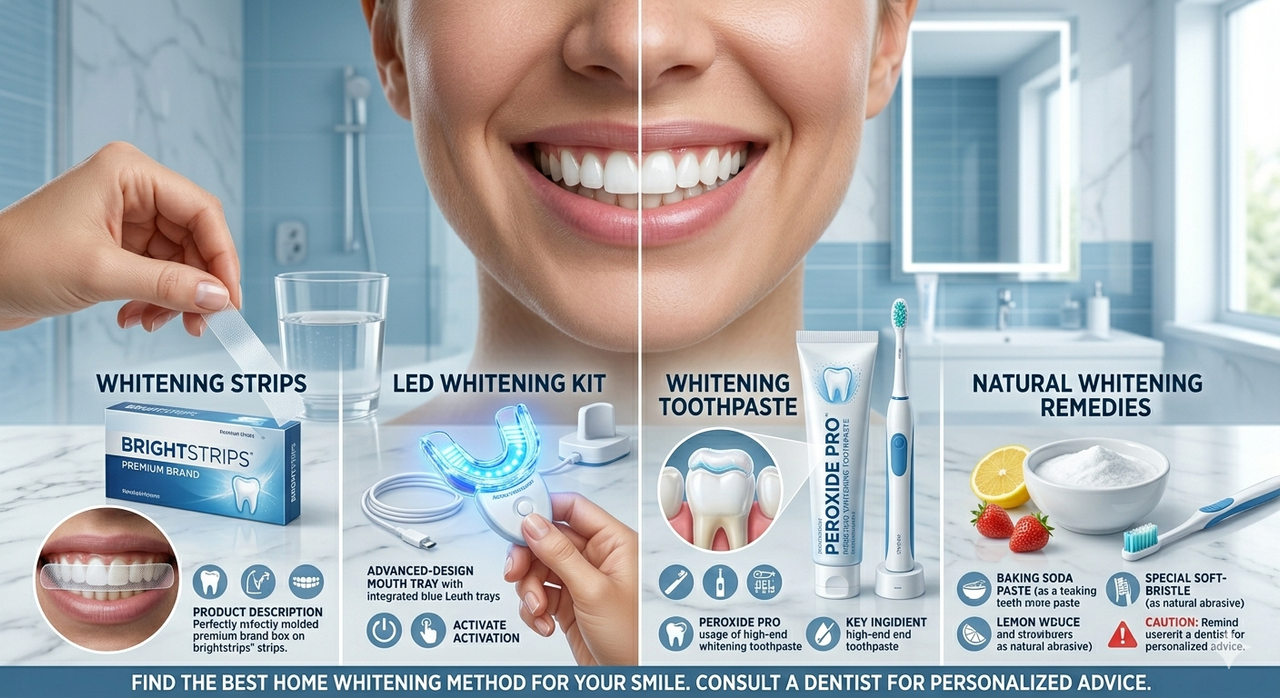
Whitening toothpaste is one of the easiest and safest methods for maintaining a brighter smile. These toothpastes contain gentle polishing ingredients that help remove surface stains caused by coffee, tea, and smoking.
Most whitening toothpaste products do not actually bleach teeth. Instead, they gradually improve brightness by polishing away external stains.
This option works best for:
- Mild discoloration
- Daily stain prevention
- Maintenance after whitening treatments
Whitening toothpaste is generally safe for daily use, but overly abrasive products may contribute to enamel wear if used aggressively.
2. Whitening Strips
Whitening strips are among the most effective at-home whitening solutions available today. They use peroxide-based gels to break down stains below the enamel surface.
Most people begin noticing results within several days of consistent use.
Benefits of whitening strips:
- Affordable
- Easy to use
- Fast visible results
- Widely available
Potential drawbacks include temporary sensitivity and gum irritation if overused.
Helpful guides: Do Whitening Strips Really Work?
3. LED Whitening Kits
LED whitening kits combine peroxide whitening gel with blue light technology. While the LED light itself does not whiten teeth directly, it may help activate the whitening gel more evenly and improve stain removal.
These kits have become extremely popular because they offer professional-style whitening at home without visiting a dentist.
Advantages of LED whitening kits:
- Fast whitening results
- More even whitening coverage
- Convenient home treatment
- Good for moderate stains
However, not all LED kits are equally effective. Cheap products may contain weak gels or poorly designed trays.
For safer whitening:
- Choose dentist-approved kits
- Avoid overusing the LED light
- Use low-sensitivity formulas if needed
- Follow treatment schedules carefully
In-depth reviews: AuraGlow Teeth Whitening Kit Review
Teeth Whitening U Wraps Review
4. Natural Teeth Whitening Methods
Natural whitening remedies are extremely popular online, but many of them are less effective than people expect. Some natural methods may help remove minor surface stains, while others can damage enamel if overused.
Popular natural whitening methods include:
- Baking soda
- Oil pulling
- Hydrogen peroxide rinses
- Activated charcoal
- Strawberries and fruit acids
Among these options, baking soda is one of the safest when used gently and occasionally. It can help polish away mild stains from the enamel surface.
However, acidic DIY methods like lemon juice should be avoided because they may weaken enamel and increase tooth sensitivity.
Natural methods work best for:
- Mild stains
- Maintenance between whitening treatments
- People with sensitive teeth
For a safer natural approach, read: How to Get Whiter Teeth Naturally
How to Whiten Teeth Naturally at Home
If you prefer avoiding strong whitening chemicals, there are several natural ways to improve tooth brightness at home safely.
The safest natural whitening habits include:
- Brushing with fluoride toothpaste twice daily
- Using baking soda occasionally
- Rinsing after coffee or tea
- Eating crunchy fruits and vegetables
- Staying hydrated to support saliva production
Saliva naturally helps clean the teeth and reduce stain buildup. Drinking enough water throughout the day can significantly improve oral hygiene and reduce discoloration.
Natural whitening is usually slower than peroxide-based whitening, but it may be a better option for people with enamel sensitivity.
Best Way to Whiten Teeth at Home Without Damaging Enamel
Many people worry about enamel damage during whitening treatments. The safest way to whiten teeth without damaging enamel is by using moderate whitening methods consistently instead of aggressive bleaching.
The best enamel-safe whitening habits include:
- Using low-peroxide whitening products
- Limiting whitening sessions
- Choosing sensitivity-friendly formulas
- Avoiding acidic DIY remedies
- Using fluoride toothpaste daily
It’s also important to avoid brushing immediately after acidic drinks like soda, coffee, or citrus beverages because enamel becomes temporarily softer.
Wait at least 30 minutes before brushing after consuming acidic foods or drinks.
If you already have weak enamel, whitening should be approached carefully.
Helpful guides: Enamel Damage: Signs, Causes, and Prevention
Enamel Erosion vs Teeth Stains
Hydrogen Peroxide to Whiten Teeth
Hydrogen peroxide is one of the most common whitening ingredients used in professional and at-home whitening products. It works by breaking down stain molecules inside the tooth structure.
Most whitening strips, gels, and whitening kits contain hydrogen peroxide or carbamide peroxide in controlled amounts.
When used properly, hydrogen peroxide can be safe and effective. However, excessive use may cause:
- Tooth sensitivity
- Gum irritation
- Temporary discomfort
- Enamel weakening over time
For safer whitening:
- Use products exactly as directed
- Avoid daily overuse
- Choose lower concentrations for sensitive teeth
- Take breaks between treatments
Hydrogen peroxide whitening works best for yellow surface stains and mild discoloration.
Teeth Whitening at Home in 2 Minutes — Does It Work?
Many viral videos claim you can whiten your teeth at home in just two minutes using baking soda, lemon juice, charcoal, or other DIY hacks. While some of these methods may temporarily remove minor surface stains, most do not provide dramatic whitening results.
In some cases, these “2-minute whitening tricks” may actually damage enamel or increase sensitivity.
Common quick-whitening methods online include:
- Baking soda and water paste
- Lemon juice mixtures
- Activated charcoal brushing
- Hydrogen peroxide rinses
Among these methods, baking soda is usually the safest when used occasionally and gently. Acidic ingredients like lemon juice should be avoided because they can erode enamel over time.
Real whitening usually requires:
- Consistent oral hygiene
- Multiple whitening sessions
- Controlled peroxide formulas
- Time and maintenance
Fast whitening is possible, but permanent dramatic results rarely happen in only a few minutes.
Best Teeth Whitening Method for Sensitive Teeth
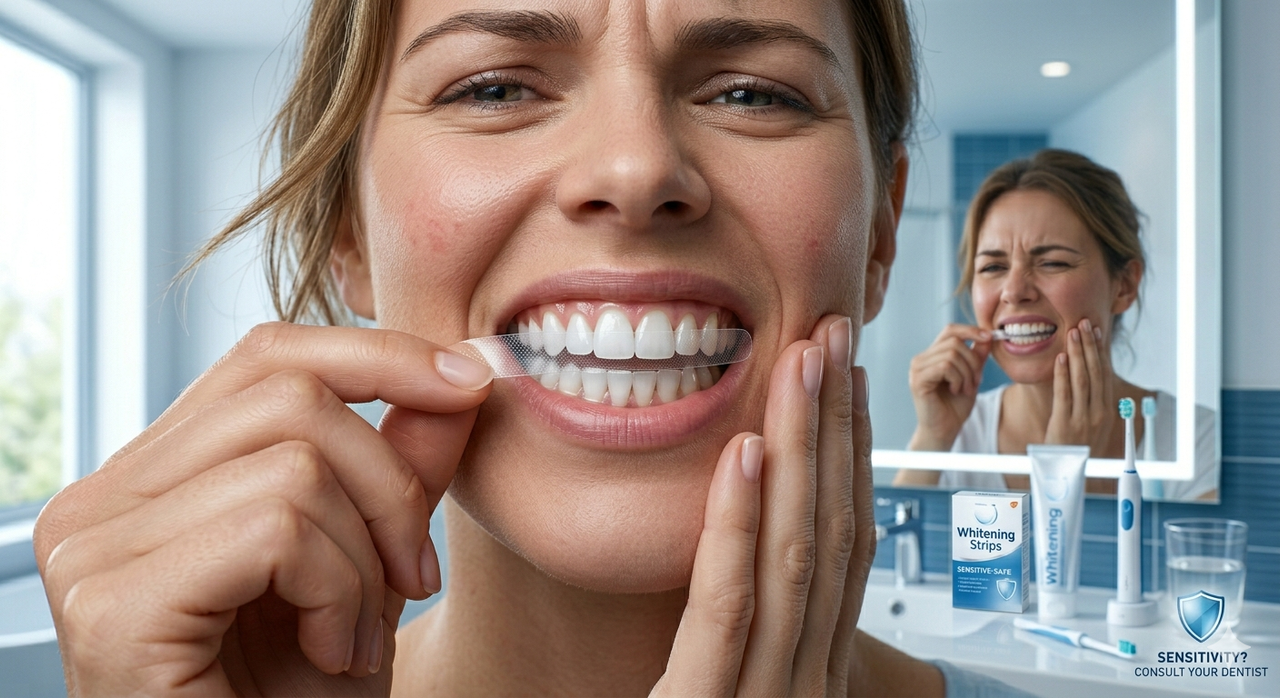
If your teeth become painful or sensitive during whitening, you are not alone. Tooth sensitivity is one of the most common side effects of whitening products.
The best whitening methods for sensitive teeth are usually:
- Low-peroxide whitening strips
- Sensitivity whitening toothpaste
- Shorter whitening sessions
- Custom dentist-supervised trays
People with thin enamel should avoid aggressive whitening treatments because enamel cannot fully regenerate once significantly damaged.
To reduce sensitivity during whitening:
- Use fluoride toothpaste daily
- Take breaks between treatments
- Avoid overusing strips or gels
- Use products designed for sensitive teeth
Related articles: Best Whitening Strips for Sensitive Teeth
Why Teeth Become Sensitive After Whitening
Translucent Teeth: Is Your Enamel Weak?
Professional Whitening vs At-Home Whitening
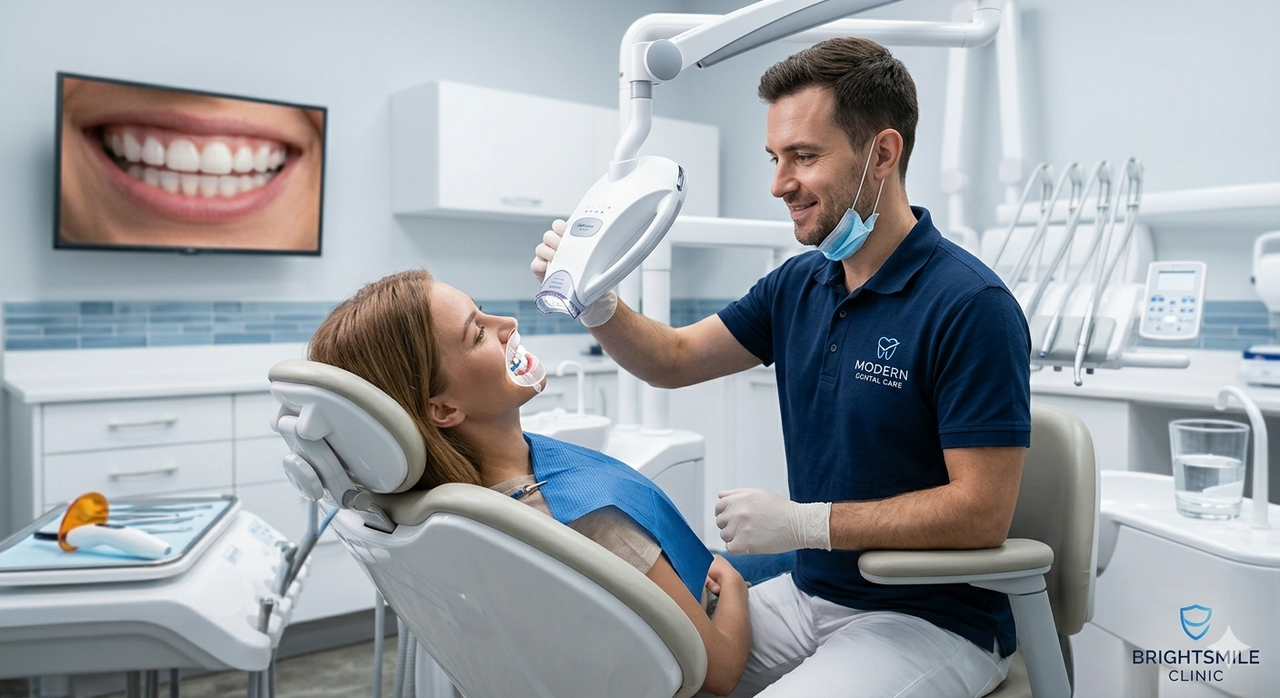
Both professional whitening and at-home whitening can improve tooth color, but they differ in strength, speed, cost, and safety.
Professional Whitening
- Faster results
- Stronger whitening agents
- Dentist supervision
- Higher cost
- Better for deep stains
At-Home Whitening
- More affordable
- Convenient
- Slower results
- Good for maintenance
- Lower peroxide concentrations
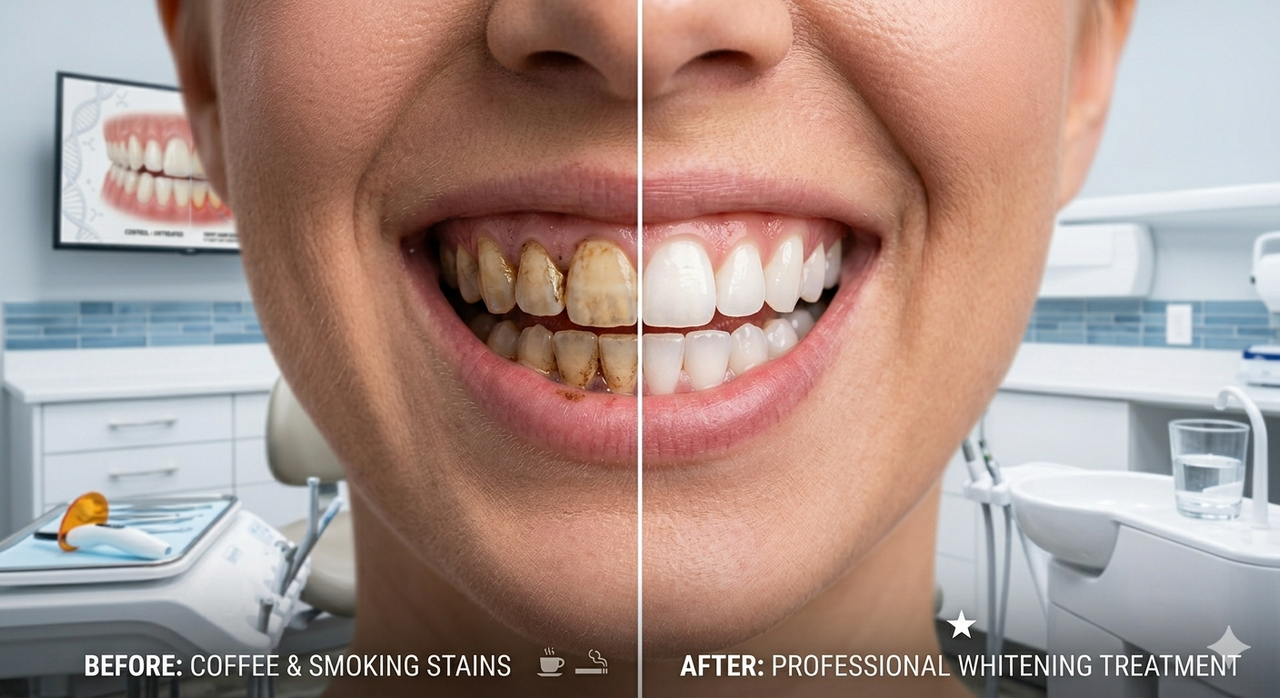
For people with severe discoloration, smoking stains, or deep yellowing, professional whitening may deliver more dramatic improvements.
At-home whitening works best for mild to moderate stains and ongoing maintenance.
How Long Do Teeth Whitening Results Last?
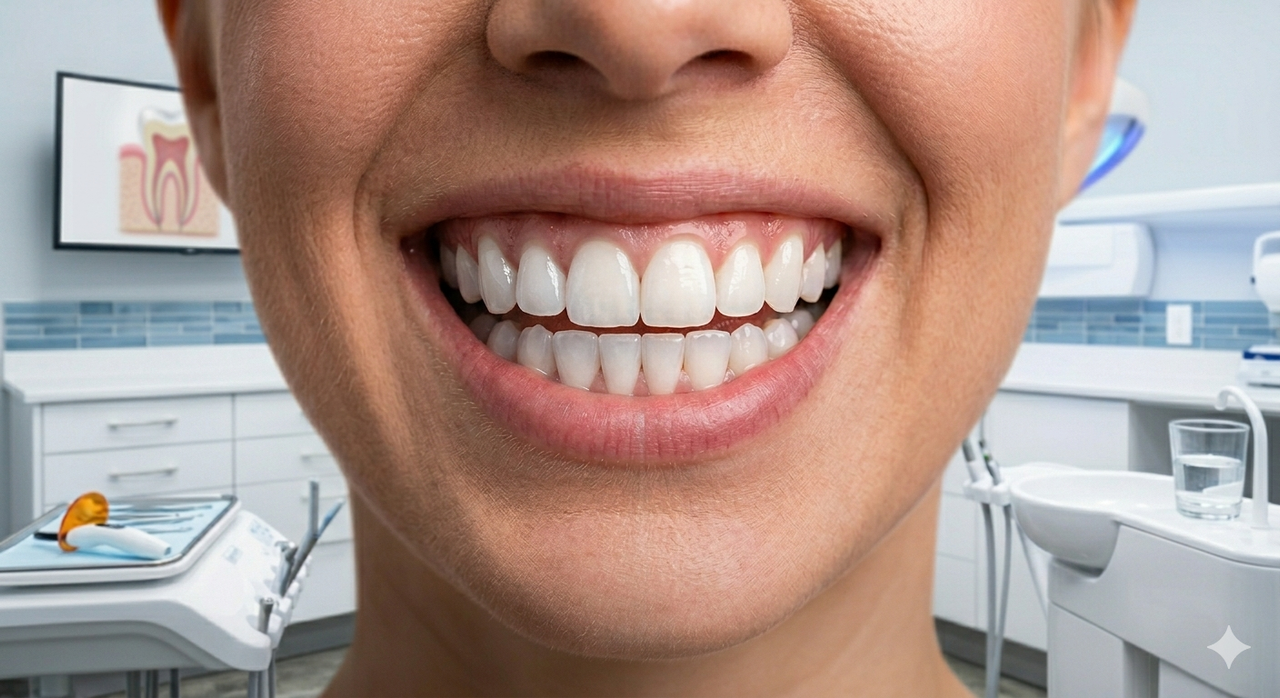
Teeth whitening results can last anywhere from several months to several years depending on your lifestyle, oral hygiene, and whitening method.
Factors that affect whitening longevity include:
- Coffee and tea consumption
- Smoking habits
- Diet and acidic drinks
- Oral hygiene routine
- Type of whitening treatment used
Professional whitening usually lasts longer than basic whitening toothpaste or DIY remedies.
To maintain results:
- Brush twice daily
- Rinse after staining foods
- Avoid smoking
- Use whitening toothpaste for maintenance
- Schedule regular dental cleanings
Learn more: How Long Does Teeth Whitening Last?
How Long Does Teeth Whitening Really Last?
Best Practices to Maintain White Teeth
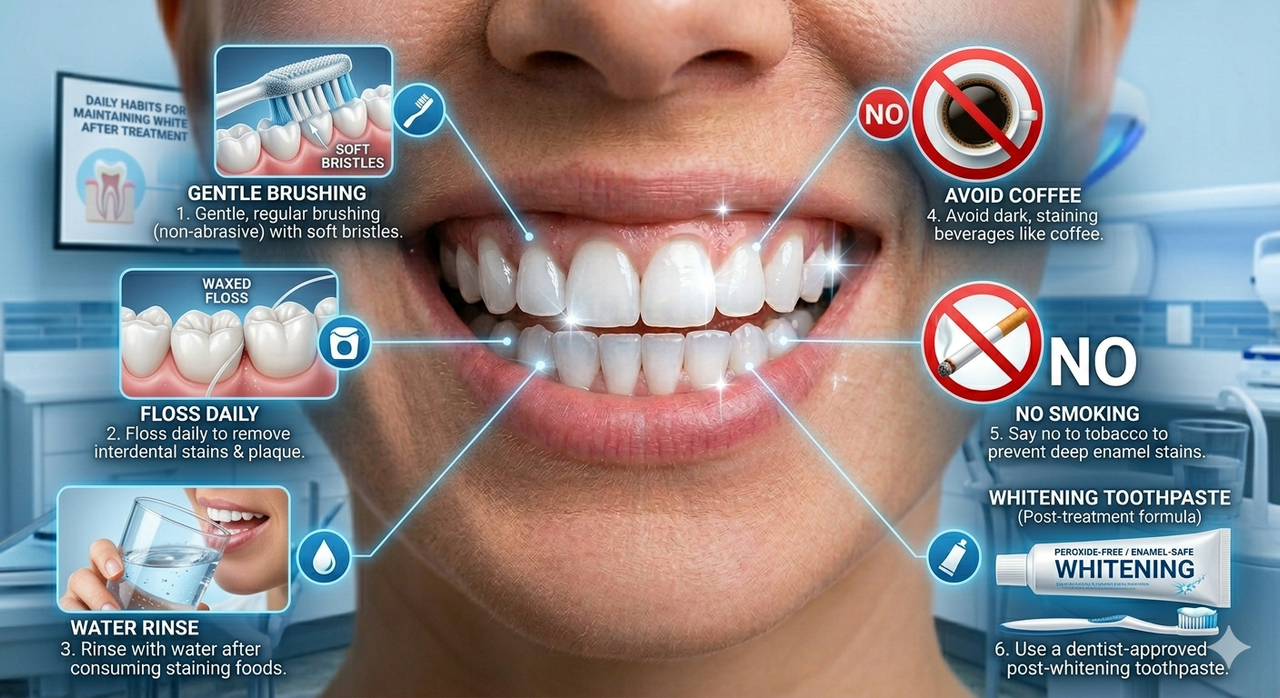
Whitening your teeth is only part of the process. Maintaining white teeth requires daily habits that reduce new stain buildup and protect enamel.
Best practices include:
- Brush twice daily with fluoride toothpaste
- Floss regularly
- Rinse after coffee, tea, or soda
- Use a straw for dark beverages
- Avoid smoking and tobacco
- Limit acidic drinks
- Visit your dentist regularly
Consistent oral hygiene is one of the biggest factors affecting long-term whitening success.
Final Thoughts
The best teeth whitening methods at home combine safety, consistency, and realistic expectations. Whitening strips, LED kits, and professional-grade products can significantly improve tooth brightness when used correctly.
Natural whitening methods may help with mild stains, but aggressive DIY remedies should be avoided to protect enamel health.
If you have sensitive teeth or weak enamel, choosing gentle whitening products and following dentist-approved methods is essential.
With the right whitening strategy and proper oral care, you can safely achieve a brighter smile at home without damaging your teeth.
FAQ
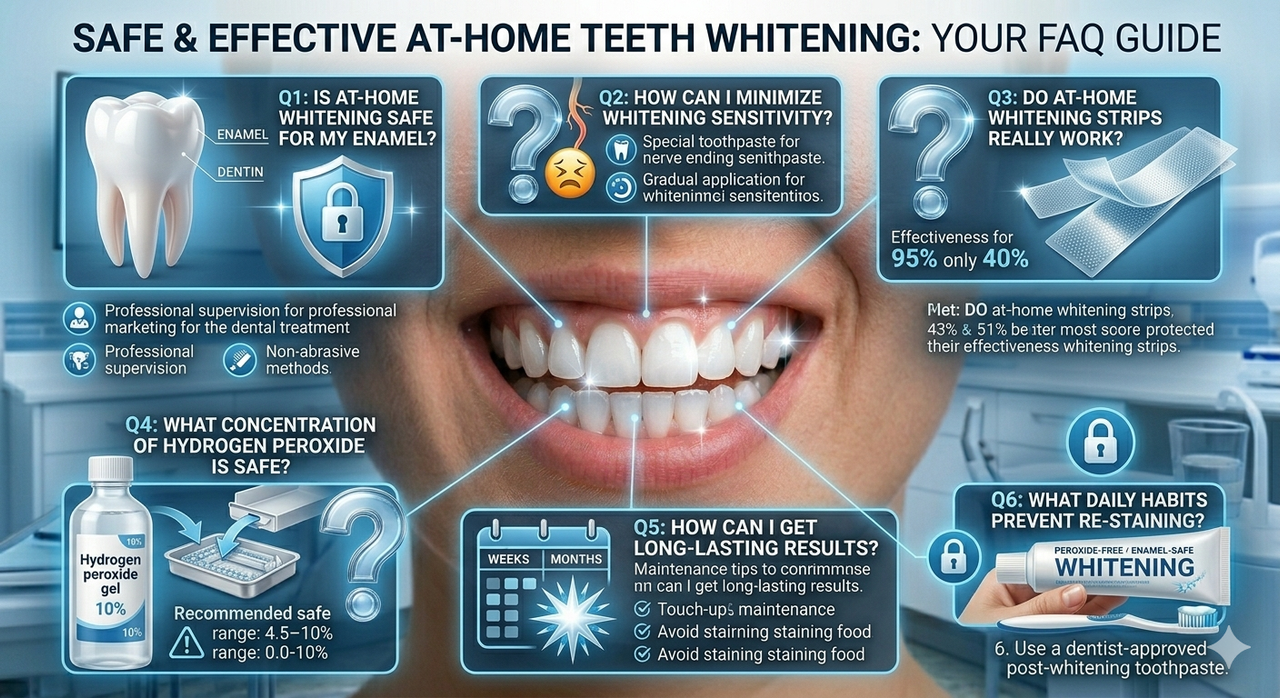
What is the safest way to whiten teeth at home?
The safest methods include dentist-approved whitening strips, LED kits, and low-peroxide whitening products used according to instructions.
Does teeth whitening damage enamel?
Whitening products used correctly are generally safe, but overuse and harsh DIY remedies may weaken enamel over time.
What is the fastest way to whiten teeth at home?
Peroxide-based whitening strips and LED whitening kits usually provide the fastest visible results.
Can yellow teeth become white again?
Yes, many yellow teeth stains can improve significantly with proper whitening treatments and good oral hygiene habits.
Is hydrogen peroxide safe for teeth whitening?
Hydrogen peroxide is commonly used in whitening products and can be safe when used in controlled amounts.
How long do whitening results last?
Results may last from several months to years depending on diet, smoking, oral hygiene, and whitening maintenance.
Related Teeth Whitening Guides
- Teeth Whitening for Smokers: Safe Ways to Remove Nicotine Stains
- Does Teeth Whitening Damage Enamel?
- Best Whitening Strips for Sensitive Teeth
- How To Strengthen Tooth Enamel Naturally
- How To Remove Coffee Stains From Teeth