
How to Strengthen Tooth Enamel Naturally: Foods, Habits, and Tips
Tooth enamel plays a major role in keeping teeth strong, healthy, and protected from everyday wear. Although enamel is considered the hardest substance in the human body, it is still vulnerable to damage over time. Daily eating habits, acidic drinks, poor oral care routines, and certain health conditions may gradually weaken this protective layer.
Many people only begin paying attention to enamel after noticing symptoms such as increased tooth sensitivity, transparent tooth edges, or teeth appearing more yellow than before. Unfortunately, by the time these changes become obvious, enamel may already be experiencing noticeable wear.
There is also a common misunderstanding that enamel can completely regrow after damage. Unlike skin or some body tissues, enamel behaves differently. Once a significant amount of enamel is lost, the body cannot naturally regenerate it. However, certain habits and dietary choices may help support and strengthen existing enamel.
Learning how to naturally protect enamel can help improve long-term oral health and reduce future dental problems.
If you already notice yellow teeth that may be connected to enamel changes, check out our related guide:
Why Do Teeth Look Yellow With Thin Enamel? Causes and Solutions

What Is Tooth Enamel and Why Is It Important?
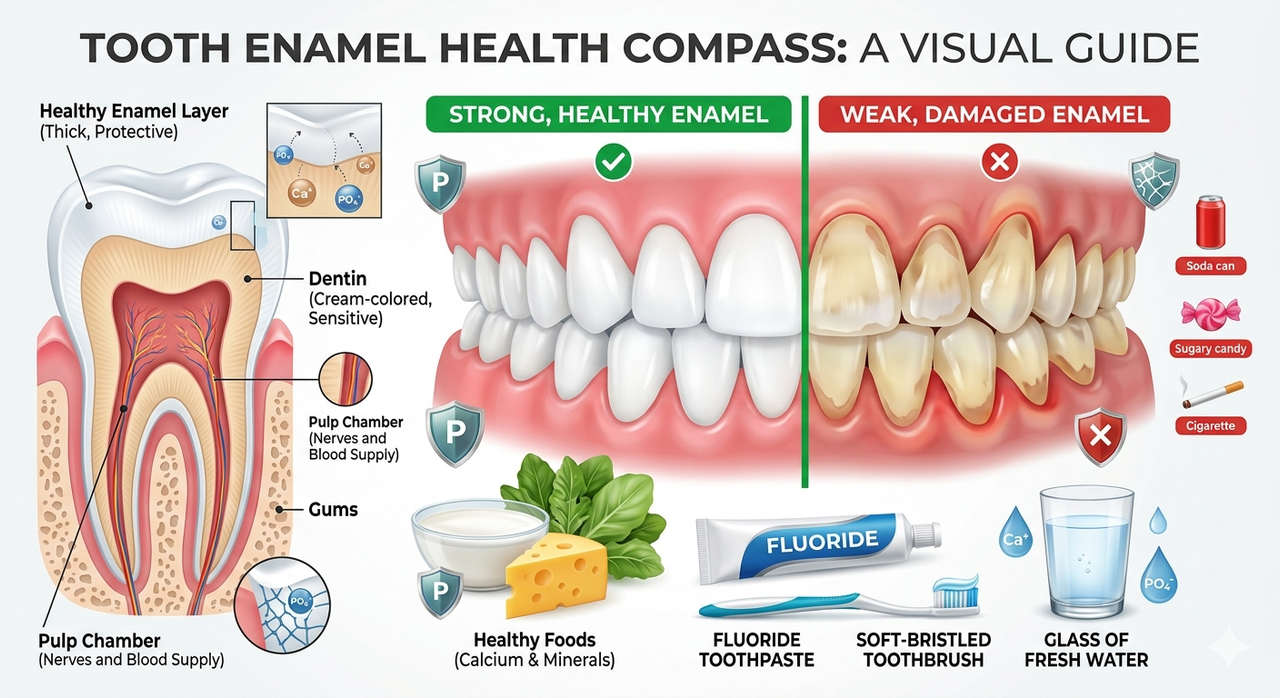
Tooth enamel is the hard protective outer layer that covers the visible portion of every tooth. It acts as a shield that protects the softer inner structures from physical damage, harmful bacteria, temperature changes, and acids found in food and drinks.
Even though enamel is extremely strong, it is not indestructible. Every day, teeth face pressure from chewing, acidic foods, sugars, and natural wear. Over time, these factors may gradually affect enamel strength.
One important fact that surprises many people is that enamel is naturally slightly translucent. Beneath enamel sits another layer called dentin, which has a darker yellow tone. Healthy enamel helps reduce how visible dentin appears underneath.
When enamel weakens or becomes thinner, the protective barrier becomes less effective, increasing the risk of sensitivity and changes in tooth appearance.
Why Enamel Is Important
- Protects teeth from acids
- Reduces sensitivity
- Supports tooth structure
- Helps maintain tooth color
- Protects inner tooth layers
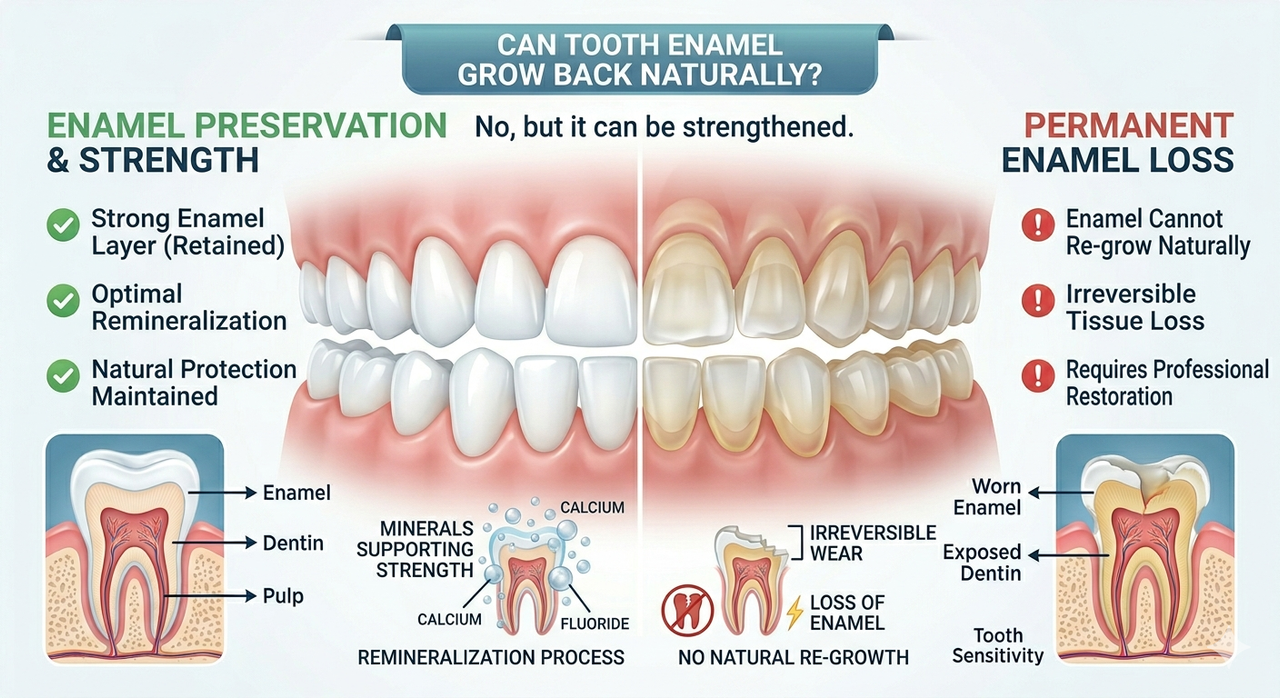
Can Tooth Enamel Grow Back Naturally?
One of the most common questions people ask is whether enamel can grow back after becoming damaged. Since enamel plays an important role in protecting teeth, many people hope that the body can naturally replace lost enamel in the same way skin repairs itself after a cut.
Unfortunately, tooth enamel behaves differently from many other tissues in the body.
Enamel forms during the early development of teeth and does not contain living cells. Because of this, once a significant amount of enamel is lost, the body cannot completely regenerate it.
This does not necessarily mean there is no way to improve enamel health.
Although damaged enamel cannot fully regrow, weakened enamel may sometimes benefit from a process known as remineralization.
Remineralization happens when minerals such as calcium and phosphate become available to help strengthen the tooth surface.
Saliva naturally supports this process every day. Healthy saliva contains minerals that may help protect teeth and support enamel strength.
Certain daily habits may help support remineralization:
- Using fluoride toothpaste
- Drinking enough water
- Reducing sugar intake
- Limiting acidic beverages
- Maintaining regular oral hygiene
Many internet sources promise ways to completely rebuild enamel naturally at home. These claims can create unrealistic expectations.
The goal is usually not creating brand-new enamel. Instead, the focus is helping preserve and strengthen the enamel that already exists.
Small daily improvements often create stronger long-term results than relying on quick solutions.
Signs Your Tooth Enamel May Be Weak
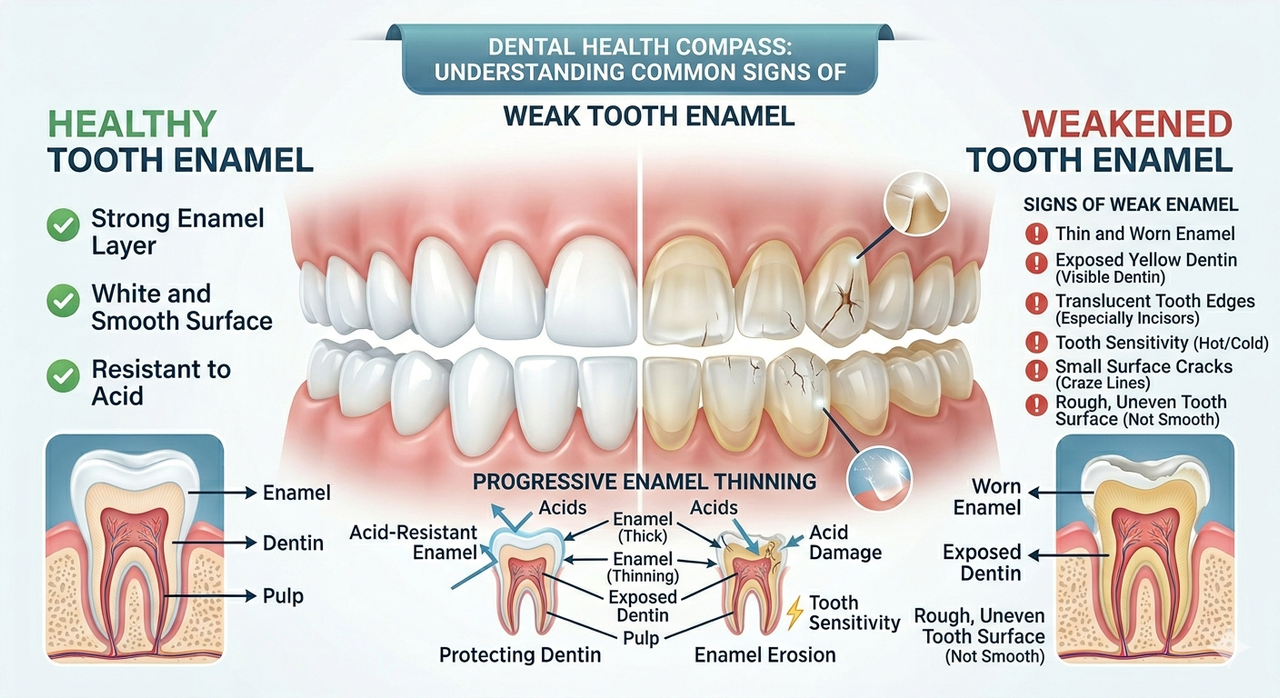
Enamel wear usually develops gradually. Because changes happen slowly, many people do not immediately notice the early warning signs.
Understanding possible symptoms may help identify concerns before they become more noticeable.
One of the most common signs is increased sensitivity.
People with weaker enamel sometimes feel discomfort when consuming:
- Hot drinks
- Cold foods
- Ice cream
- Sweet foods
- Acidic beverages
Other signs can include changes in tooth appearance and texture.
- Yellow-looking teeth
- Transparent tooth edges
- Small cracks
- Rough tooth surfaces
- Dull-looking teeth
These symptoms do not automatically confirm enamel loss, but they can be signs that deserve attention.
Natural Ways to Strengthen Tooth Enamel
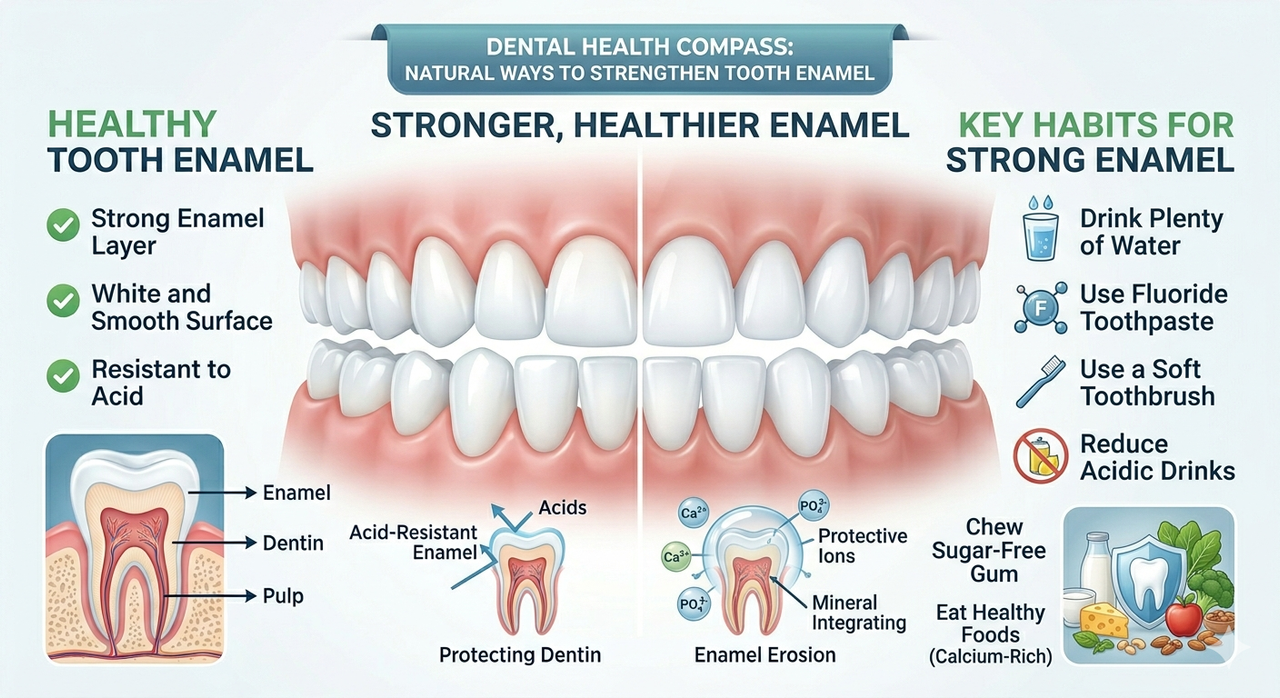
Strengthening tooth enamel naturally usually focuses on protecting the enamel you already have and supporting healthy remineralization processes. Small daily habits often create stronger long-term results than occasional intensive treatments.
Many people look for fast solutions, but enamel health is often influenced by consistency rather than short-term changes.
Use Fluoride Properly
Fluoride is widely used because it may help strengthen tooth surfaces and support resistance against acid exposure. Many toothpaste products include fluoride as part of daily oral care.
Using fluoride products consistently may help support enamel protection over time.
Stay Hydrated
Drinking enough water supports saliva production. Saliva plays an important role because it naturally helps wash away food particles and provides minerals that support teeth.
Dry mouth may increase the risk of acid-related damage because protective saliva becomes limited.
Reduce Acidic Foods and Drinks
Frequent exposure to acids can gradually affect enamel surfaces.
Examples include:
- Soda
- Sports drinks
- Energy drinks
- Citrus beverages
- Highly acidic foods
Reducing excessive exposure may help protect enamel from unnecessary wear.
Use Soft-Bristle Toothbrushes
Many people believe brushing harder cleans teeth better. In reality, excessive brushing pressure may create additional friction on enamel surfaces.
Soft-bristle toothbrushes may help clean effectively while reducing unnecessary abrasion.
Chew Sugar-Free Gum
Sugar-free gum may help stimulate saliva production after meals.
Increased saliva may help support natural mineral activity inside the mouth.
Avoid Excess Sugar
Bacteria inside the mouth feed on sugars and create acids as a byproduct.
Repeated acid exposure may contribute to enamel weakening over time.
Reducing excessive sugar intake may support healthier long-term oral conditions.
Best Foods That Help Strengthen Tooth Enamel
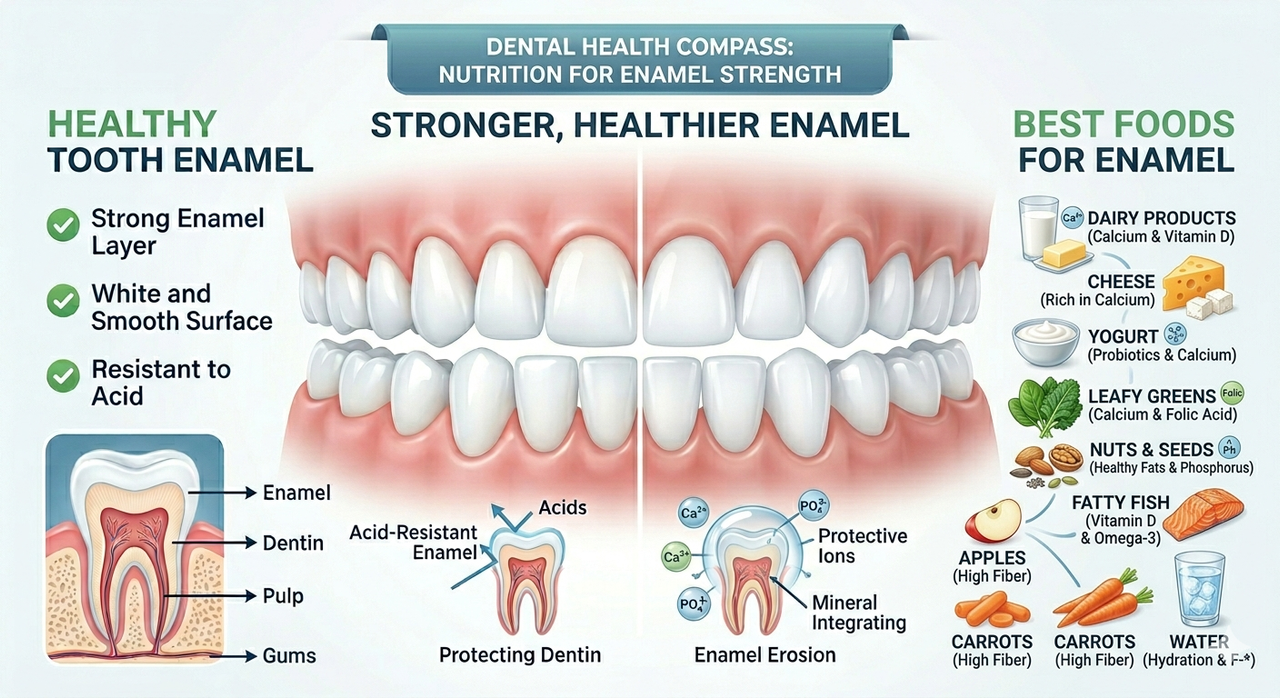
Food choices can play an important role in supporting strong teeth. Certain nutrients help provide minerals commonly associated with healthy enamel function.
Although food alone cannot rebuild lost enamel, healthy dietary habits may support the natural processes that help protect teeth.
Dairy Products
Dairy products often contain calcium and phosphorus, which are commonly associated with healthy teeth.
Leafy Greens
Leafy vegetables may provide minerals and nutrients that support overall oral health.
Fatty Fish
Some fish provide nutrients linked to bone and tooth health.
Nuts and Seeds
Nuts and seeds may provide minerals that support healthy dietary balance.
Crunchy Fruits and Vegetables
Foods with crunchy textures may stimulate saliva production and help clean the mouth naturally.
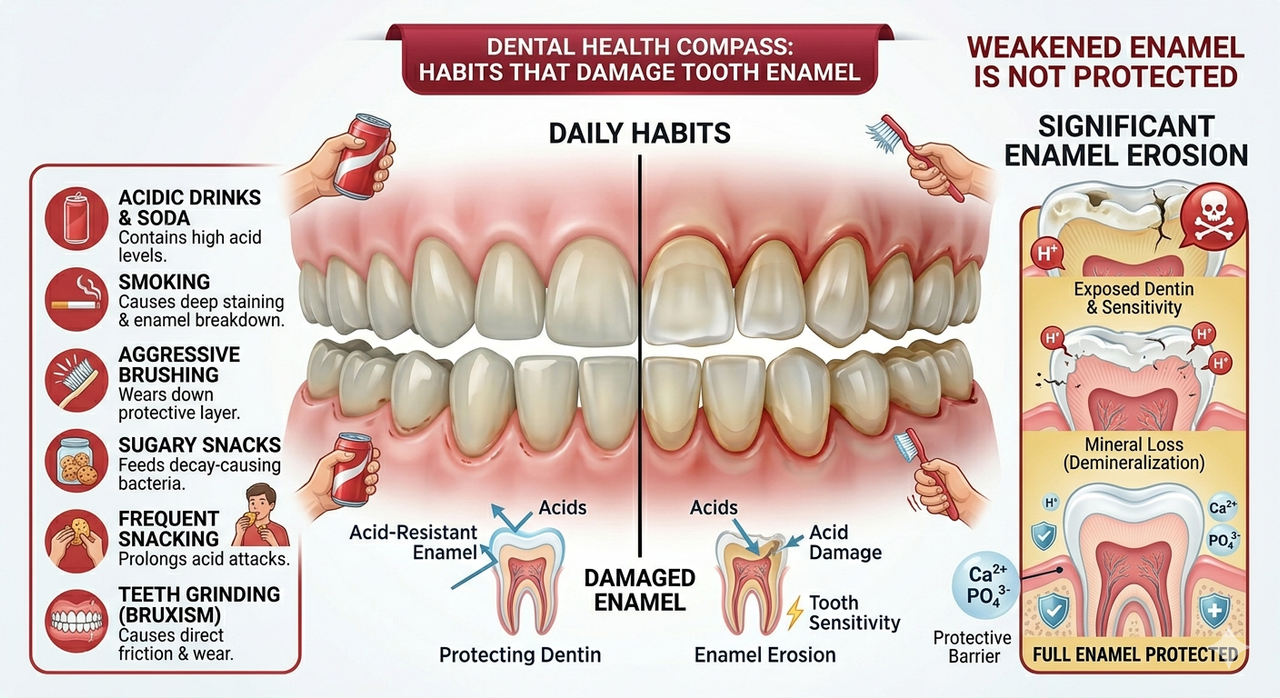
Daily Habits That Damage Tooth Enamel
Many people focus on strengthening enamel while overlooking daily habits that may gradually weaken it. Even healthy routines can sometimes contribute to enamel wear when performed incorrectly.
Understanding which habits may affect enamel can help reduce unnecessary damage over time.
Teeth Grinding
Grinding or clenching teeth creates pressure that may slowly wear down the outer surface of teeth. Some individuals grind their teeth while sleeping without realizing it.
Over time, repeated pressure may contribute to enamel wear and increased sensitivity.
Brushing Too Hard
Brushing harder does not always mean brushing better.
Using excessive force repeatedly may create additional friction on the tooth surface. Hard-bristle toothbrushes may increase this effect even more.
Acidic Drinks
Acidic beverages may gradually weaken enamel when consumed frequently.
Examples include:
- Soda
- Energy drinks
- Sports drinks
- Citrus beverages
Repeated acid exposure may soften enamel surfaces over time.
Constant Snacking
Frequent snacking can create repeated acid activity inside the mouth because bacteria process sugars and carbohydrates throughout the day.
Allowing time between meals may reduce constant acid exposure.
Smoking Habits
Smoking affects oral health in several ways and may contribute to staining and other dental concerns.
Best Toothpaste for Enamel Protection
Choosing toothpaste for enamel support often depends on individual needs.
Many products focus on strengthening and protecting teeth while helping reduce sensitivity.
Features people commonly look for include:
- Fluoride ingredients
- Sensitivity support
- Low-abrasive formulas
- Remineralization support
People with sensitivity sometimes prefer products designed specifically for sensitive teeth because they may feel more comfortable during daily use.
Consistency often matters more than constantly switching products.
Can You Restore Tooth Enamel?
Many people ask whether enamel can be restored after damage occurs.
The answer depends on what "restore" means.
If enamel has become weakened but remains present, certain habits may help support strengthening processes through remineralization.
However, severely lost enamel generally does not naturally return.
In some situations, dental professionals may recommend cosmetic or protective treatments depending on the condition of the teeth.
If your goal also includes improving tooth appearance safely, read our complete guide:
How to Whiten Teeth at Home: Safe Methods That Actually Work
Frequently Asked Questions
Can tooth enamel grow back naturally?
Tooth enamel does not naturally regrow after a significant amount has been lost. However, weakened enamel may benefit from remineralization processes that help strengthen existing tooth surfaces.
How can I harden my tooth enamel?
Daily habits such as using fluoride toothpaste, staying hydrated, reducing acidic foods, and maintaining good oral hygiene may help support enamel strength over time.
What foods strengthen tooth enamel?
Foods commonly associated with enamel support include dairy products, leafy greens, fish, nuts, seeds, and crunchy fruits and vegetables.
How long does remineralization take?
The process varies from person to person because diet, oral hygiene habits, saliva production, and overall oral health can influence results.
Can damaged enamel be repaired?
Minor weakening may sometimes benefit from remineralization support. Severe enamel loss usually cannot naturally return and may require professional treatment options.
Final Thoughts
Strong tooth enamel plays an important role in protecting teeth and supporting long-term oral health. Even though enamel naturally faces daily challenges from food, drinks, and normal wear, small habits may influence its condition over time.
Many people search for quick fixes, but long-term enamel protection usually depends on consistency rather than temporary solutions.
Healthy food choices, proper brushing habits, hydration, and reducing excessive acid exposure may help support stronger teeth over time.
Protecting enamel today can help reduce future sensitivity concerns and maintain a healthier smile in the long run.